
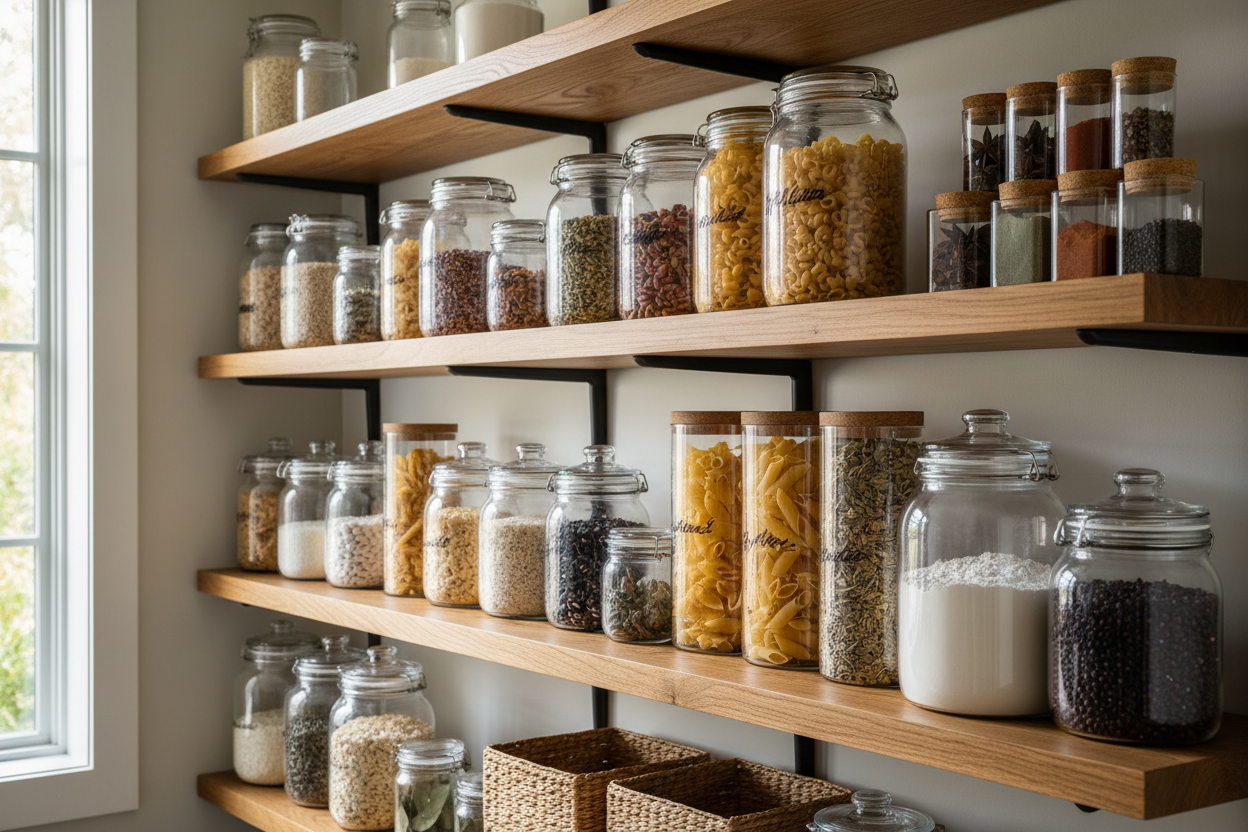
Why Proper Storage Is the Key to Buying in Bulk
Buying pantry staples in bulk is one of the smartest moves a home cook or food service operator can make. The cost savings are real — but only if your product stays fresh. Poor storage leads to spoilage, pest problems, and wasted money. Follow these guidelines and your bulk pantry will pay for itself many times over.
The Four Enemies of Dry Goods
Before diving into specific ingredients, understand what degrades dry goods fastest:
- Moisture: The #1 cause of clumping, mold, and spoilage in dry goods. Even humidity in the air can degrade quality over time.
- Heat: Accelerates oxidation and rancidity, especially in products containing fats (like baking mixes or nut flours).
- Light: UV exposure breaks down nutrients and can cause off-flavors in oils and starches.
- Air (oxygen): Causes oxidation and staleness. The less air in your storage container, the better.
The solution to all four: airtight containers in a cool, dark, dry location.
Storage Guidelines by Ingredient Type
Grains & Rice
White rice, farro, barley, and other whole grains are among the most forgiving pantry staples. Stored in airtight containers away from heat and light, they can last 2–5 years. Brown rice and other whole-grain varieties contain more natural oils and should be used within 6–12 months or stored in the freezer for longer shelf life.
Pro tip: For very large quantities, food-grade 5-gallon buckets with gamma-seal lids are ideal for food service storage rooms.
Flour & Baking Mixes
All-purpose flour keeps well for 1–2 years in an airtight container. Whole wheat flour, almond flour, and other specialty flours have shorter windows (3–6 months at room temperature) due to higher fat content — refrigerate or freeze for longer storage.
Pre-mixed baking mixes (like pancake or cake mixes) typically last 12–18 months if sealed. Once opened, transfer to an airtight container and use within 6 months.
Gelatin & Thickeners
Plain unflavored gelatin is one of the most shelf-stable dry goods you can stock. Properly stored in a cool, dry place in its original sealed packaging or an airtight container, plain gelatin lasts indefinitely — it doesn't truly expire, though potency can diminish slightly over many years.
For food service kitchens that use gelatin regularly in desserts, aspics, panna cottas, or as a clarifying agent, buying by the case is the most cost-effective approach. Our Chef's Companion Plain Gelatin (12 × 1 lb per case) is a professional-grade staple trusted by commercial kitchens.
Store cornstarch, arrowroot, and other thickeners the same way — airtight, away from moisture. Shelf life: 2–3 years.
Sugar & Salt
Pure granulated sugar and salt have an indefinite shelf life when kept dry. The only enemy is moisture, which causes clumping. Store in airtight containers with a food-safe desiccant packet if your storage area is humid. Brown sugar hardens when exposed to air — store with a terra cotta brown sugar saver or a slice of bread to maintain moisture.
Dried Pasta & Noodles
Dried pasta lasts 2–5 years in a sealed container. Once opened, transfer to an airtight container. Egg-based pastas have a shorter shelf life (1–2 years) due to the fat content in the egg.
Dried Beans & Lentils
Technically safe to eat indefinitely, but quality degrades after 2–3 years — older beans take longer to cook and may never fully soften. Store in airtight containers and label with the purchase date. Rotate stock using FIFO (first in, first out).
Best Practices for Food Service Bulk Storage
- Label everything: Include product name, date received, and use-by date on every container.
- FIFO rotation: Always move older stock to the front. New deliveries go to the back.
- Dedicated storage area: Keep dry goods away from cleaning chemicals, raw proteins, and high-humidity zones like dishwashing areas.
- Pest prevention: Inspect deliveries before storing. Use sealed containers — never store in original paper bags long-term.
- Temperature: Ideal dry storage temperature is 50–70°F (10–21°C). Avoid areas near ovens, steam lines, or exterior walls in hot climates.
- Inventory audits: Do a monthly walk-through of your dry storage to catch anything approaching its use-by date before it becomes waste.
Building Your Bulk Pantry: Where to Start
The best bulk pantries are built around what you actually use. Start with your highest-volume ingredients — the ones you reorder most often — and buy those in case quantities first. Then expand into supporting ingredients as your storage capacity and systems improve.
Not sure where to start? Browse our Dry Goods collection and Pantry staples for professional-grade ingredients available by the case. From baking mixes and thickeners to grains and specialty ingredients, we stock what serious kitchens depend on.
Explore our full food catalog to build a pantry that works as hard as you do.